㰀琀爀㸀

Barrelhouse Frank Melrose
Chicago Trumpeter Tells of Last Days of Famous Chicago
Blues Pianist; Last of the Professors
By PETE DALEY (Daily) I had heard about the pianist Frank Melrose by 1930. Both of us lived near Hammond, but because he played up in Chicago or in Kansas City, he wasn’t home much, I didn’t meet him until later. Fellow musicians made a legend of his terrific piano style. It was in about 1932 that we worked together for the first time on a gig in Hegewisch. I started the job on bass horn, but before half the evening was over our trumpet man went blotto, so I finished the night on his instrument. Little details of that job are clear in mind. I recall as if it happened yesterday how Frank played even beyond his reputation — a solid and beautiful barrelhouse piano. He wore a brown suit; his straw hat was crown up on the upright lid. He played with his hands high over the keyboard, like a classical man; his fingers walked around like spider legs.
Afterwards we were on a lot of weekend gigs together. Whenever I got a job or could suggest personnel, Frank it was on piano. Evidently he was satisfied with my horn because he used to call me for work too, perhaps even oftener than I called him. One night in the summer of 1933 Frank and I went to the Fair in Chicago, and then when it closed, to some spots on the Southside. At one place Frank heard a good sounding piano. He pushed a fumbling black kid off the stool and we took over for about six hours. Along about daylight five Indians arrived from one of the Fair’s sideshows. I guess Frank didn’t realize about Indians and firewater when he said, sure, they could use our jug. When the quart was gone, we got some more. Soon the chief went mildly nuts and insisted on marrying a dizzy frump who had come in and had started giving them the routine. Frank wanted everybody happy, so he put his coat on backwards and married the couple with a phone book. Last we saw they were blissful.
By 1935 we were pretty regularly together. There were several weeks at Johnny Nichols’ in Calumet City with Owen Johnson drums and a Joe Sullivan reeds. At Nichols’ we celebrated like New Year’s Eve on the night when Frank’s first child, Franklin Jr., was born.
In 1932 we had a pretty good stay at the Continental Club in Cal City. Nick Nicholas was on drums, Dooney Ward clarinet. During this time my eyesight failed completely for several months. The fellows had to pick me up at home to take me to the job, and then lead me to the stand and afterwards down again and home. Sometimes they came during the day and we’d talk or walk or listen to the radio.
Frank’s playing had kids and young musicians packing around the stand every night. He killed them and us with his unpredictable breaks, wild solo choruses, and the piano burlesques he’d do with a straight face. One of his tricks reminded me of the drunken dance where the dancer begins to lean and then runs to catch up with himself, but finally too late. Frank would play a staggering arpeggio or chromatic chords, getting farther and farther off the beam, and finally as if ‘What the Hell’, he crashed both arms down on the keyboard. Two beats and away he’d go again. During my blind spell I couldn’t see the crowd that applauded Frank’s solos, but it made me feel good inside. He was my boy. I was getting an idea like religion that everything in spiritual life was in good jazz and that we were almost over the hill, almost we were playing perfect jazz. The joint jobs were more fun for us than anything that happened since, still there was something more we wanted.
By 1935 we had begun to shape in our minds a dream band, an outfit that would stick together until it was perfect, playing jazz, ragtime, and blues. Jack Daley (Daly), who sometimes came in on piano when Frank couldn’t, had the same slant. But he knew Frank was the man for piano, so he concentrated on his banjo. When we talked about the dream band we considered the fellows we had worked with. Some of them seemed consistently better than anybody on records; conceitedly perhaps we didn’t bother with anybody outside the Chicago area to get exactly what we wanted. Just as any jazzman whom we had learned to know on records, our boys made mistakes, but in the dream we had cured their errors or rehearsed away their shortcomings. And honest to God, it finally worked out that way, John.
Sleepy Kaplan became our drummer (he’s at a place on North Avenue now); LeRoy Smith clarinet (he was last heard from on Bataan). Bill Helgert was trombone (now in Boyd Raeburn’s outfit at the Band Box in Chicago). Bill Moore was on bass. All of us had the Blues and Dixieland spirit. It was Frank’s library which we used, and in a short time we began to find that as well as on the Blues and two-beat jazz we were sold on Frank’s versions of breakdown ragtime tunes like Russian Rag, The Romp, Wild Cat, and Roll Up The Carpets. Frank gave us the ragtime urge by showing us what could be done with it. I’ve listened to every ragtime band that has come out on records, and to dozens which haven’t. None of them could compare with ours, I honestly believe. Maybe Frank was the only man who ever lived who knew all the secrets. Some day I hope I can get with a group that will make that kind of music again. You’ll learn then what I’m talking about.
For a while we held Wednesday rehearsals at the Chelsea Hotel where a gang besides our own would collect and listen: when we were through rehearsals everyone would sit in for jam. Fazola once told me, when playing with us on a post-rehearsal session, “Pete, if anything should happen to LeRoy, remember I wanna.”
It didn’t occur to me until later, that I had neglected to tell Fazola that our spirit stemmed from the results Frank drew out of us with the same kind of natural ease Jelly Roll had used in shaping his groups. When recently I heard Lu Watters band I recognized from their first note that their greatest deficiency was a Frank Melrose, someone who could dominate and mold the group into musical unity. Louis, Muggsy, Fats and Noone have done it.
For two reasons this was a group like nothing commercial. First, because we couldn’t wait for rehearsals (we even got together on Sunday afternoons); second, we couldn’t get jobs. Once when we did manage to snag an Irish picnic up on the North side, a priest who apparently knew all things righteous asked for Georgia Swing. That was No. 19 in our books. But you may be able to imagine how rushed for jobs we were not, playing full programs of Georgia Swing, Gary Blues, Bluisiana, Sweet Daddy, 69th and Wentworth, Have You Ever Felt that Way, and rags. Nearly we got in the Sherman Hotel — nearly. Even though nobody hired us, there were a lot of good people who knew what we were doing and said so, and gave us confidence. “Hummer” Collette, now with Columbia’s Chicago Studios, was then at Gamble’s recording laboratory. After hearing us, he invited us to use Gamble’s sound-treated rooms and good pianos. As we played he would often copy things down on record. Frank Lyons came over from his brokerage office on LaSalle Street to listen and to buy copies of what he liked best. When Hummer left Gamble, Frank bought all the copies we fellows in the band hadn’t wheedled away. Some I have still, kind of ragged now — Wild Cat, D. D. Strain, and a piano solo.
In 1936 and ’37 Frank and I sat in many times with Lee Collins’ band at the Derby Club. Lonnie Johnson was for a time in the outfit and he gave Frank such kicks with his 12-string concert guitar that we never would quit until everybody had dropped out dead drunk or dead tired. I don’t suppose Frank admired any musician more than Lonnie except Jelly.
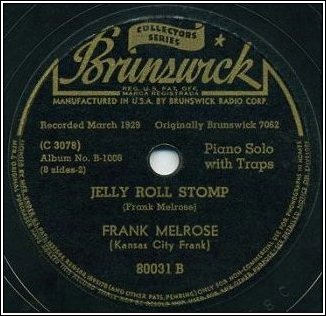
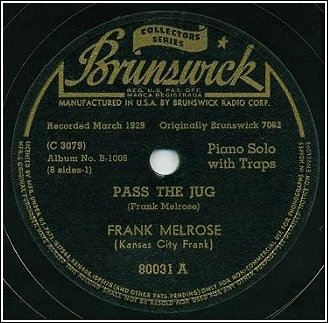
Here are some incidental data. About the time of the Chicago Fair, Frank played with Max Miller’s outfit at Club Ultra, 39th and Cottage. Frank’s recording of Whoopee Stomp on Paramount is really Boy In The Boat, which was always one of his favorites. Wherever a piano can be heard on the Kansas City Tin Roof Stompers sides for Brunswick race series, it is Frank. He may not have played on all sides, since I cannot hear piano at all on two of them. I am positive that Frank was a pianist on the 6 Memphis Nighthawk sides for Vocalion.
It was about 1937 that Frank and Georgie Barnes worked for the winter at the Little Club in Hammond. Georgie was about sixteen, and his father brought him to work and then called for him about midnight. Papa would sit around a while if they were really hitting the ball, or if a session had developed. No wonder Georgie has always worshipped Frank — you should have seen how, if business was dull, they would spend entire evenings on jazz rudiments. Frank enjoyed teaching earnest youngsters who showed promise.
One of the Detroit characters figuring in his reminiscences was a hoodlum who flashed a gun when Frank made like intermission. After bullying Frank for three hours, friend hood would clear up his little joke with a $10 tip.
There were some things about that Sunday before Labor Day 1941, the day before Frank’s death, you left unsaid. Late on Sunday morning, Frank came to our apartment in the Windsor-Wilson. My wife, Faye, helped him fix a bite, and then I sent him to the davenport to nap for a few hours. After rolling out, he played with our kids until dinner — that was unusual for Frank. I never before saw him show such interest in any children except his own. Frank was jubilant about the prosperity his machinist’s job was to bring. Faye caught the mood and celebrated by preparing a whoppin’ chicken dinner. That early evening, while I played a society fray at the Sheridan Plaza, Frank went to the Espana to see Max Miller, Sleepy, and Clary Vern Joachim. (I had been playing with the boys up to the previous week or so, but because business slumped, the boss had to lay off first our singer, then the brass section; within another few weeks chronic slumping killed the spot). After short stops in several spots, he came back at 11:30 p.m., in a hurry to make the one o’clock South Shore train to Hammond. I remember Frank saying that on the Saturday night previous he had been down to the Southside looking for some of the old familiar ‘barbecue gang’ around 48th and State. None were around. He mentioned that he wanted to try again when he had more time but tonight he had too little money left and time was short. I repeated this comment at the inquest after his death. As I said goodbye, I told him that I would stop off at the Melrose cottage on my way back from Crown Point, where I had a job the next night. I left him at Wilson Avenue.
Some of us said at the inquest that many circumstances of his death smelled fishy. Frank had no business at 135th (130th) and Oglesby, where his body was found; it was a lonely place only indirectly on his way home. Although bruised as if a car had run over him, Frank’s face had a long, clean cut below the left ear. His watch was not damaged. Nothing remained in his billfold but his Social Security card. Nobody knows. 㰀⼀琀搀㸀
㰀⼀琀愀戀氀攀㸀
| 㰀⼀琀爀㸀
㰀瀀㸀㰀椀洀最 猀爀挀㴀∀氀椀渀攀⸀最椀昀∀ 眀椀搀琀栀㴀∀㌀㔀㔀∀ 栀攀椀最栀琀㴀∀㌀㈀∀ 戀漀爀搀攀爀㴀∀ ∀ 愀氀琀㴀∀∀㸀
 㰀⼀琀搀㸀
㰀⼀琀搀㸀


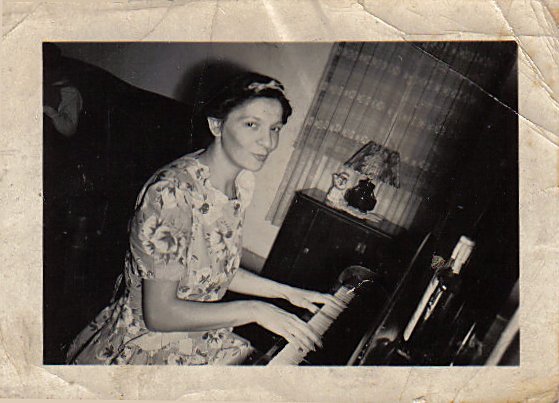
 Brian Goggin sends the following article for a previously unknown Frank Melrose engagement in Hammond, Indiana from The Hammond Times, dated